Why Personalisation Improves Marketing Performance
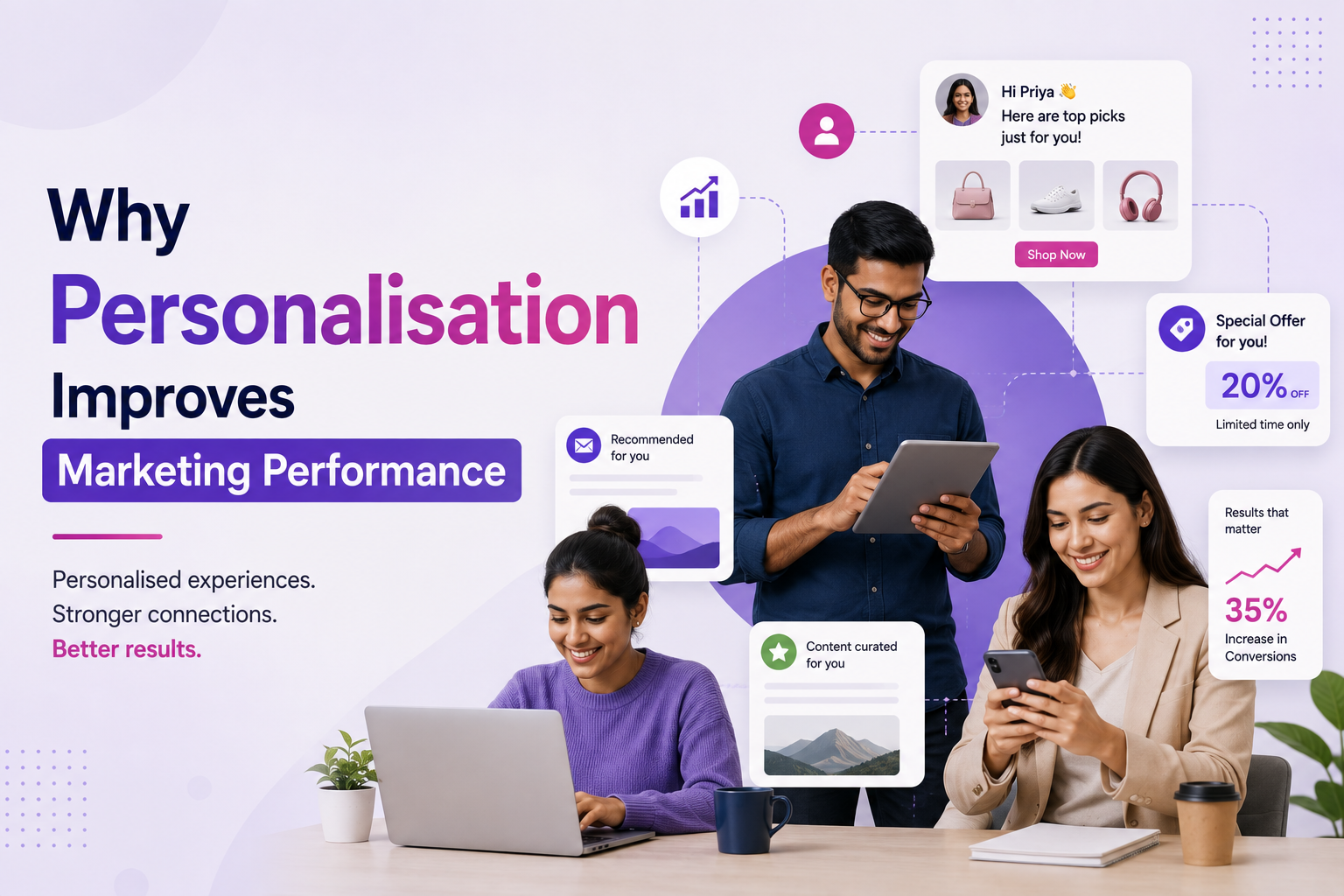
Learn how personalised marketing helps businesses deliver more relevant experiences, strengthen customer engagement, improve conversions and achieve better marketing performance.
Introduction
In a world overflowing with generic ads and cookie-cutter promotions, personalization is the secret ingredient that can make your marketing stand out. Consumers are yearning for authentic connections with brands, and data shows that personalized marketing can significantly boost engagement and conversion rates.
Research indicates that 80% of consumers are more likely to make a purchase when brands offer personalized experiences. This isn’t just a trend; it’s a fundamental shift in how businesses connect with their audiences.
Consider the following benefits of personalization:
- Increased Engagement: Tailored emails can generate up to 6 times higher transaction rates.
- Higher Conversion Rates: Personalized landing pages can lead to a 40% increase in conversion.
- Customer Loyalty: 70% of millennials say they prefer brands that personalize their shopping experiences.
As we delve deeper, you'll discover actionable strategies for implementing personalization in your marketing campaigns, along with real-life examples from industry leaders. Get ready to transform your approach and enhance your marketing performance!
Understanding Marketing Personalization
Marketing personalization involves tailoring messages and offers to individual customers based on their behavior, preferences, and demographics. This approach not only enhances user experience but also significantly boosts marketing performance.
- Customer Data Utilization: Companies leverage data from customer interactions to create targeted campaigns. For example, Amazon uses browsing history to suggest relevant products, leading to increased sales.
- Segmentation Strategies: Businesses can segment their audiences based on various factors such as age, location, and purchasing habits. A clothing brand might send different promotions to young adults versus seniors, ensuring relevance.
- Real-Time Personalization: Personalization can occur in real time. For instance, Netflix shows tailored recommendations based on previous viewing habits, keeping users engaged.
Pro tip: Start small by personalizing email subject lines or product recommendations on your website. A/B testing different approaches can help determine what resonates best with your audience.
According to a 2024 survey by Statista, 80% of consumers are more likely to make a purchase when brands offer personalized experiences, highlighting the effectiveness of this strategy.
Benefits of Personalized Marketing
- Increased Engagement: Personalized marketing captures attention more effectively. By tailoring messages to individual preferences, brands can significantly boost engagement rates. For instance, a retail company that sends personalized product recommendations saw a 20% increase in click-through rates.
- Higher Conversion Rates: When customers feel valued and understood, they are more likely to convert. According to a 2024 survey by Statista, personalized emails have an average open rate of 29%, compared to 17% for generic emails.
- Enhanced Customer Loyalty: Personalization fosters a stronger emotional connection with the brand. Companies like Starbucks use loyalty programs that reward customers based on their purchase history, resulting in increased retention rates.
- Better Data Utilization: Leveraging customer data for personalized marketing helps businesses understand their audience better. This leads to more effective targeting and optimized ad spend.
- Pro Tip: Use A/B testing to refine your personalization strategies. Experiment with different personalized messages to see which resonates best with your audience.
- Example: Netflix's recommendation engine, which suggests shows based on viewing history, exemplifies how effective personalization can drive user engagement and satisfaction.
Enhanced Customer Engagement
Personalisation is a game-changer for customer engagement, creating meaningful interactions that resonate with individual preferences. When customers feel understood, they are more likely to return.
- Tailored Content: By using data analytics, brands can deliver personalized content that speaks directly to consumer interests. For instance, Netflix uses viewing history to recommend shows, keeping users engaged and reducing churn.
- Targeted Offers: Sending tailored promotions based on purchase history can significantly increase conversion rates. For example, Amazon’s recommendation engine accounts for 35% of its total sales, showcasing the power of personalisation.
Pro Tip: Use segmentation to target specific customer groups with relevant messages. Simple changes, like addressing customers by name in emails or suggesting products similar to past purchases, can enhance their experience.
According to a 2024 survey by Statista, 80% of consumers are more likely to make a purchase when offered a personalised experience. Fostering such an environment can lead to stronger loyalty and higher lifetime value.
Improved Customer Experience
Personalisation significantly enhances customer experience by delivering tailored interactions that resonate with individual preferences. When brands successfully implement personalisation, they foster deeper connections with their audience.
- Relevant Content: Brands that analyse customer behavior can create content that aligns with individual interests. For instance, Netflix suggests shows based on viewing history, leading to increased engagement and satisfaction.
- Targeted Offers: Personalised promotions can improve conversion rates. For example, when Amazon sends tailored product recommendations based on past purchases, it results in higher sales.
- Enhanced Communication: Using customer data to inform communication styles can make messages feel more personal. Brands like Nike send customized workout tips and product suggestions based on user activity.
Pro Tip: Segment your audience based on behavior and preferences to create tailored marketing campaigns. This can enhance conversion rates and build lasting customer loyalty.
According to a 2024 survey by Statista, 70% of consumers express a preference for brands that offer personalised experiences, making it clear that personalisation is not just a trend—it's an expectation.
The Role of AI in Personalization
Artificial Intelligence (AI) is revolutionizing how brands approach personalization in marketing. By analyzing vast amounts of data, AI helps businesses understand customer preferences and behaviors more deeply.
- Data Analysis: AI algorithms can sift through customer interactions, identifying patterns that inform personalized marketing strategies. For example, Netflix uses AI to recommend shows based on users' viewing habits, leading to increased engagement.
- Real-Time Personalization: With AI, brands can offer tailored experiences in real-time. For instance, Amazon's recommendation engine suggests products based on browsing history, which can boost sales conversions significantly.
- Customer Segmentation: AI helps in dividing customers into specific segments, allowing for targeted messaging. Pro tip: Use machine learning models to refine your audience segments continually.
- Predictive Analytics: Businesses can anticipate future customer needs by using AI to predict trends. A case study on Starbucks shows how AI-driven analytics influenced their product offerings and locations.
Incorporating AI-driven personalization strategies not only enhances customer satisfaction but also drives better marketing performance.
AI Personalization Strategies
- Data-Driven Recommendations: Utilize AI to analyze customer behavior and preferences. Tools like Amazon’s recommendation engine suggest products based on past purchases, enhancing user experience and increasing sales.
- Dynamic Content: Employ AI to tailor website content in real-time. For example, Netflix uses algorithms to personalize viewing suggestions, keeping users engaged longer.
- Segmentation and Targeting: Use AI to create detailed customer segments. According to a 2024 survey by Statista, personalized email campaigns yield a 29% higher open rate. Segmenting audiences allows for targeted messaging that resonates more effectively.
- Predictive Analytics: Implement predictive models to forecast customer needs. For instance, Spotify analyzes listening habits to curate personalized playlists, improving user satisfaction and retention.
- Chatbots and Virtual Assistants: Integrate AI chatbots to provide personalized customer support. They can utilize past interactions to recommend solutions, making the customer journey smoother.
Pro Tip: Regularly update your AI models with fresh data to enhance the accuracy of personalization strategies. Timely adjustments can significantly boost marketing performance.
Leveraging Marketing Automation
Marketing automation tools are essential for implementing personalized strategies effectively. They allow businesses to gather data, segment audiences, and deliver tailored content at scale. how you can leverage marketing automation for improved personalization:
- Data Collection: Use forms and surveys to gather insights about your customers’ preferences and behaviors. For example, Mailchimp automates email list segmentation based on user interactions, ensuring targeted communication.
- Segmentation: Divide your audience into specific groups based on demographics, interests, and behaviors. Tools like HubSpot enable marketers to create detailed personas, allowing for more tailored campaigns.
- Personalized Content Delivery: Automate the delivery of emails, social media posts, and ad campaigns that resonate with each segment. For instance, Amazon sends personalized product recommendations based on previous purchases, enhancing user engagement.
- A/B Testing: Use automation to run A/B tests on different personalized messages. This helps identify what resonates best with each audience segment, optimizing future campaigns.
Pro Tip: Always analyze the performance of your automated campaigns. Use insights to refine your strategy, ensuring your personalization efforts evolve with your audience's needs.
Tools for Effective Marketing Automation
When it comes to marketing automation, leveraging the right tools can significantly enhance your personalization efforts. Here are some essential tools to consider:
- Email Marketing Platforms: Tools like Mailchimp and HubSpot allow for segmented email campaigns based on customer behavior and preferences. For instance, a retail company saw a 25% increase in sales after personalizing its email content using customer purchase history.
- CRM Software: Solutions like Salesforce and Zoho CRM enable businesses to track customer interactions and tailor communications accordingly. A case study showed that a financial services firm improved customer retention by 30% through targeted offers based on client profiles.
- Analytics Tools: Utilize tools like Google Analytics and Hotjar to understand user behavior on your website. These insights help you craft personalized web experiences that resonate with your audience.
- Social Media Management: Platforms like Hootsuite and Buffer facilitate personalized social media interactions. One brand increased engagement by 40% by responding to customers’ comments with tailored content.
Pro Tip: Regularly test and tweak your automated campaigns based on performance metrics to optimize personalization and drive better results.
Creating Personalized Content
Creating personalized content is essential for capturing the attention of your audience and driving engagement. By tailoring your messaging to meet individual needs, you can significantly enhance the effectiveness of your marketing campaigns.
- Use Data: Leverage customer data such as past purchases, browsing behavior, and demographic information to create content that resonates. For instance, an online clothing retailer can send personalized recommendations based on a customer's previous purchases.
- Segment Your Audience: Divide your audience into specific segments based on interests or behaviors. This allows you to craft targeted emails or social media posts, increasing the relevance of your content. For example, a travel company might create separate newsletters for adventure seekers and luxury travelers.
- Dynamic Content: Implement dynamic content on your website or emails that changes based on user engagement. If a user frequently browses hiking gear, display related products prominently.
Pro Tip: Regularly update your customer personas based on feedback and analytics to ensure your content remains relevant. According to a 2023 report by HubSpot, personalized content can increase conversion rates by up to 60%.
Targeted Marketing Techniques
- Segmentation is a foundational technique in targeted marketing. By dividing your audience based on demographics, behaviors, or interests, you can tailor your messaging. For example, an email campaign that targets young adults with trendy product promotions outperforms a one-size-fits-all approach.
- Behavioral targeting utilizes data on user actions to deliver personalized content. If a customer frequently browses outdoor gear, sending them targeted ads for hiking boots or camping equipment can significantly increase conversion rates.
- Dynamic content on websites enhances personalization. For instance, a visitor from a colder region might see winter gear highlighted, while someone from a warmer area sees summer essentials.
- Retargeting ads remind potential customers of products they’ve shown interest in. A study by AdRoll found that retargeted ads can boost conversion rates by up to 150%.
Pro Tip: Use A/B testing to refine your personalized marketing efforts. Test different messages and visuals to see which resonates best with each segment, optimizing for higher engagement and conversion.
Conclusion
Personalisation is not just a trend; it’s a fundamental shift in how brands engage with consumers. By tailoring messages and offers to individual preferences, companies can significantly enhance their marketing performance.
Key Takeaways:
- Increased Engagement: Personalised emails generate 6 times higher transaction rates than non-personalised messages.
- Higher Conversion Rates: Businesses that leverage personalisation can see conversion rates improve by up to 10%. For instance, Amazon’s recommendation system accounts for 35% of its total revenue.
- Customer Retention: Personalised experiences foster loyalty, with 80% of consumers more likely to purchase from brands that offer tailored experiences.
Pro Tips:
- Utilise data analytics to understand customer behavior and preferences better.
- Segment your audience to create targeted marketing campaigns that resonate with specific groups.
- Test and iterate your personalisation strategies regularly for continuous improvement.
As we move forward, embracing personalisation will be crucial. Start small, measure your results, and scale up your efforts to see significant improvements in your marketing outcomes.
About the author

Santosh Shet
Santosh Shet is the Founder of Appyminds and a technology entrepreneur with over 20 years of experience in software development, web applications, mobile apps, AI solutions, and business automation. He helps businesses transform ideas into scalable digital products through modern web development, mobile applications, intelligent automation, and AI-powered solutions. Santosh regularly writes about artificial intelligence, software development, digital transformation, SaaS products, and emerging technology trends.