What is an AI Website Revamp? A Complete Guide for Businesses
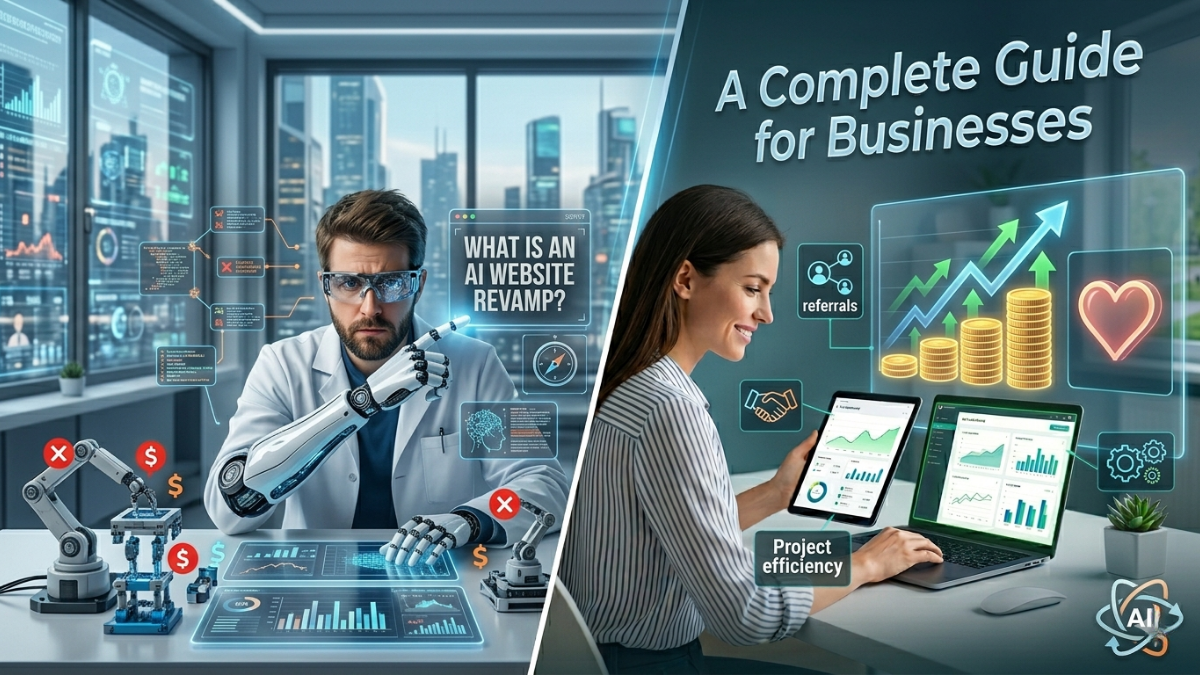
In today's digital landscape, an outdated website can hinder your business growth, costing you valuable customers. Enter the concept of an AI website revamp—an innovative solution that harnesses artificial intelligence to enhance your online presence.
Introduction
In today's digital landscape, an outdated website can hinder your business growth, costing you valuable customers. Enter the concept of an AI website revamp—an innovative solution that harnesses artificial intelligence to enhance your online presence.
Businesses are increasingly turning to AI not just for automation, but for creating tailored, engaging websites that meet the demands of modern users. This comprehensive guide will explore how AI can transform your website into a more effective marketing tool, focusing on:
- User experience improvements: AI can analyze user behavior to optimize website layout and design.
- Content personalization: Customize content to match visitor interests using AI-driven insights.
- SEO enhancements: Leverage AI tools to improve search engine rankings and visibility.
For example, a retail brand implemented an AI-driven chatbot that increased customer engagement by 30%, showcasing the potential of AI in transforming customer interactions.
Whether you're looking to increase conversions, enhance user engagement, or simply refresh your brand image, an AI website revamp is the way forward. Let's dive into the essentials of this transformative approach.
Understanding AI Website Revamp
Revamping a website using AI involves integrating artificial intelligence technologies to enhance user experience, functionality, and overall performance. Companies are increasingly leveraging AI tools for tasks ranging from content personalization to advanced analytics.
Key components of an AI website revamp include:
- Personalization: AI can analyze user behavior and preferences, allowing businesses to tailor content and recommendations. For instance, e-commerce sites like Amazon use AI for product suggestions, significantly boosting sales.
- Chatbots and Virtual Assistants: Implementing AI chatbots improves customer support by providing instant responses. A case study on Sephora’s chatbot revealed a 30% increase in customer engagement.
- Content Optimization: AI tools can help optimize content for SEO by identifying trending keywords and suggesting improvements. Tools like Clearscope or Surfer SEO are great for this purpose.
Pro Tip: Regularly evaluate the AI tools you implement. Tracking metrics such as user engagement and conversion rates can help you adjust strategies effectively. According to a 2024 survey by Statista, businesses that adapt to user needs through AI see a 20% increase in customer satisfaction.
What is an AI Website Revamp?
An AI website revamp involves using artificial intelligence technologies to enhance, redesign, or update a website's functionality, aesthetics, and user experience. Businesses leverage AI tools to analyze user behavior, optimize content, and streamline design processes.
Key components include:
- Content Optimization: AI algorithms can analyze existing content and suggest improvements for SEO, engagement, and relevance. For example, tools like Clearscope help identify high-ranking keywords and topics.
- Personalization: AI can tailor user experiences based on individual preferences, leading to higher conversion rates. Netflix is a prime example, using AI to recommend shows based on viewing history.
- Design Automation: AI-driven design tools like Wix ADI can create layouts and styles based on user input, accelerating the development process.
Pro Tip: Implementing chatbots powered by AI can enhance customer support and engagement on your website. According to a 2024 survey by Gartner, businesses utilizing chatbots saw a 30% increase in customer satisfaction.
In summary, an AI website revamp modernizes your online presence, aligns with user expectations, and can significantly boost business performance.
Benefits of Using AI for Website Redesign
- Enhanced User Experience: AI algorithms analyze user behavior to optimize website layouts and navigation. For example, an e-commerce site might use AI to determine which product categories attract the most clicks, making it easier for customers to find what they want.
- Personalization: AI enables websites to deliver tailored experiences. By analyzing data, AI can recommend products or content that align with individual user preferences. A study by McKinsey showed that personalization can lead to a 10-30% increase in conversion rates.
- Speed and Efficiency: AI tools can streamline the redesign process by automating repetitive tasks, such as A/B testing or content generation. This not only saves time but also allows teams to focus on strategic decisions.
- Data-Driven Insights: AI provides actionable insights from user data, helping businesses make informed design choices. For instance, a travel agency might discover that users prefer brighter images of destinations, prompting a shift in visual strategy.
- Pro Tip: Leverage AI-powered analytics tools to continuously monitor site performance post-redesign. Adjust elements based on real-time user feedback to enhance engagement and retention.
How AI is Transforming Website Design
AI is rapidly changing the landscape of website design, enabling businesses to create more personalized and engaging user experiences. Here are some key transformations driven by AI:
- Automated Design Suggestions: Tools like Wix ADI leverage AI to analyze user preferences and create customized layouts instantly. Businesses can save time and resources while getting professional-grade designs.
- User Behavior Analysis: AI algorithms study how users interact with websites. For instance, platforms like Hotjar use machine learning to provide insights on user behavior, allowing for targeted optimizations.
- A/B Testing Optimization: AI enhances A/B testing by predicting outcomes based on historical data, leading to faster and more accurate design decisions. Companies like Optimizely are using AI to streamline this process.
- Content Personalization: By analyzing user data, AI can tailor content recommendations, improving engagement. For example, Netflix's use of AI-driven suggestions has significantly boosted viewer retention.
Pro Tip: Implement AI tools that offer real-time feedback to continuously improve your website design based on user interactions. Integrating AI not only automates but also elevates the design process, making it more efficient and user-centric.
AI Tools for Website Redesign
AI tools play a crucial role in modern website redesign, enabling businesses to create more efficient and user-friendly experiences. Here are some key AI tools to consider:
- Chatbots: AI-powered chatbots can enhance customer interaction on your site. For example, Drift successfully increased engagement for a SaaS company by 30% through real-time visitor interaction.
- Personalization Engines: Tools like Optimizely use AI to tailor content based on user behavior. Businesses implementing these solutions saw a 20% increase in conversion rates.
- Design Assistance: Platforms like Wix ADI and Bookmark utilize AI to simplify the design process. They generate website layouts based on user preferences, allowing for quicker launches.
- SEO Optimization: Tools such as Clearscope and Surfer SEO analyze content effectiveness and suggest improvements, which can elevate search rankings significantly.
Pro Tip: Always test the changes made by AI tools using A/B testing. This will help you understand user preferences and adjust your strategy accordingly for maximum impact.
Popular AI Tools in the Market
When considering an AI website revamp, various tools can enhance your project’s efficiency and effectiveness. Here are some popular AI tools currently making waves in the market:
- ChatGPT: Ideal for content generation, it can create engaging blog posts and FAQs. For instance, a local bakery increased its online orders by 30% after implementing ChatGPT for customer interactions on its website.
- Canva: With its AI-powered design features, it helps businesses craft stunning visuals for their websites. Users can easily create banners and infographics, making it simpler to keep their site visually appealing.
- SEMrush: An excellent tool for SEO, it leverages AI to analyze competitors and suggest keywords. Companies using SEMrush have reported a significant boost in their search engine rankings.
- Google Analytics: Enhanced with AI capabilities, it offers insights into user behavior, enabling businesses to make data-driven decisions. By analyzing traffic patterns, companies can optimize their website layouts accordingly.
Pro Tip: Always select tools that integrate well with your current systems to streamline your workflow and minimize disruptions during your website revamp.
Steps to Rebuild a Website with AI
- Define Your Goals
- Start by determining what you want to achieve with the website revamp. Are you looking to increase traffic, improve user engagement, or boost conversions? Clearly defined goals will guide every step of the process.
- Analyze Your Current Site
- Use AI tools like Google Analytics and heatmaps to assess user behavior. Identify which pages perform well and which need improvement. For example, a retail site may discover that its product pages are receiving high traffic but low conversion rates.
- Leverage AI for Content Creation
- Utilize AI-driven content generation tools to create optimized blog posts, product descriptions, and landing pages. AI can analyze trending keywords and suggest topics that resonate with your audience.
- Design with User Experience in Mind
- Employ AI design tools that can help create user-friendly interfaces. Consider using platforms like Wix or Squarespace, which often incorporate AI features to enhance design aesthetics and functionality.
- Test and Iterate
- After launching the revamped site, continuously monitor performance using AI analytics tools. A/B testing different layouts or content can provide insights into what works best. For instance, adjusting call-to-action buttons based on user interaction data can significantly improve engagement.
Pro Tip: Keep your audience involved by using feedback tools to gather insights post-revamp, allowing for further improvements based on user experience.
Step-by-Step Guide
- Assess Your Current Website
- Begin by evaluating your existing website. Identify what works well and what doesn't. Use tools like Google Analytics to track user behavior and gather insights. For example, if users are bouncing from a specific page, that’s a red flag.
- Define Your Objectives
- Establish clear goals for your revamp. Do you want to increase conversions, improve user experience, or enhance SEO? Setting specific objectives like "increase lead generation by 20% in six months" can guide your design choices.
- Research AI Tools
- Explore AI-driven tools and platforms that align with your needs. For instance, tools like Wix ADI can help generate website layouts based on user preferences. Familiarize yourself with options that can automate content creation or improve UX.
- Create a Design Plan
- Outline a design strategy that incorporates AI features. This may include chatbots for customer service or personalized content recommendations. Consider how these elements can enhance visitor interaction.
- Implement and Test
- Launch the revamped site and ensure comprehensive testing. A/B testing can help determine which design elements yield better results. Monitor performance metrics closely to assess the impact of changes.
- Gather Feedback and Iterate
- Post-launch, solicit feedback from users. Regular reviews and adjustments will help keep the website aligned with user expectations. Utilize surveys to capture insights and adapt accordingly—continuous improvement is key.
Common Challenges and Solutions
Revamping a website with AI can present several challenges, but understanding them can lead to effective solutions.
- Data Integration: Merging existing data with new AI tools can be complex. Pro Tip: Conduct a thorough audit of existing data and ensure compatibility with new systems before starting the revamp.
- Cost Management: Implementing AI solutions often comes with unexpected expenses. Case Study: A mid-sized company faced a 30% budget overrun during their AI integration. They mitigated this by setting clear project milestones and budget checkpoints.
- User Experience (UX): Balancing AI features with intuitive design can be tricky. Pro Tip: Utilize A/B testing to gauge user response to new AI functionalities, ensuring that enhancements don't complicate navigation.
- Staff Training: Employees may resist new technologies. Pro Tip: Facilitate hands-on workshops and provide ongoing support to ease the transition.
- Performance Monitoring: Tracking the effectiveness of AI implementations is crucial but can be overlooked. Regularly review key performance indicators (KPIs) such as site traffic and user engagement to measure success.
By proactively addressing these challenges, businesses can optimize their AI-driven website revamps for better outcomes.
How to Revamp a Website Using AI
Revamping a website using AI can streamline the process and enhance user experience. Start by assessing your current site performance with tools like Google Analytics to identify areas for improvement.
- Content Optimization:
- Use AI-driven tools like Clearscope or SurferSEO to analyze top-ranking content in your niche.
- Pro Tip: Focus on integrating relevant keywords naturally into your content for better search visibility.
- Design and Layout:
- Implement AI design tools like Wix ADI or Bookmark that can suggest layouts based on your content.
- Example: A local bakery used AI to create a fresh, mobile-friendly site that increased user engagement by 40%.
- Personalization:
- Utilize AI algorithms to provide personalized recommendations based on user behavior.
- Pro Tip: Incorporate tools like Dynamic Yield for dynamic content that adjusts to user preferences.
- SEO Enhancements:
- Leverage AI tools like SEMrush or Moz for optimizing SEO strategies tailored to your target audience.
- Monitor performance regularly to adapt to new trends, enhancing your site’s relevance and ranking.
By integrating these AI-driven strategies, your revamped website will not only look modern but also function more effectively, driving user satisfaction and conversion rates.
Conclusion
Revamping your website with AI can significantly enhance user experience, boost engagement, and ultimately drive conversions. Key takeaways from this guide include:
- Understanding AI Tools: Familiarize yourself with AI-driven solutions like chatbots, personalization engines, and design automation to streamline your website revamp process.
- Enhanced User Experience: Implement features like predictive analytics to tailor content to user preferences, as seen with brands like Amazon, which increase customer satisfaction and retention.
- Data-Driven Insights: Utilize AI for real-time analytics to make informed decisions about design and content, ensuring your website evolves with user needs.
Pro Tips:
- Start small—test AI features on a section of your website before a full rollout.
- Collect user feedback post-revamp to measure impact and make necessary adjustments.
By embracing AI in your website revamp, you not only stay competitive but also cater to the growing expectations of your users. Ready to transform your online presence? Start exploring AI solutions today!
About the author

Santosh Shet
Santosh Shet is the Founder of Appyminds and a technology entrepreneur with over 20 years of experience in software development, web applications, mobile apps, AI solutions, and business automation. He helps businesses transform ideas into scalable digital products through modern web development, mobile applications, intelligent automation, and AI-powered solutions. Santosh regularly writes about artificial intelligence, software development, digital transformation, SaaS products, and emerging technology trends.