Website Redesign Checklist for Growing Businesses
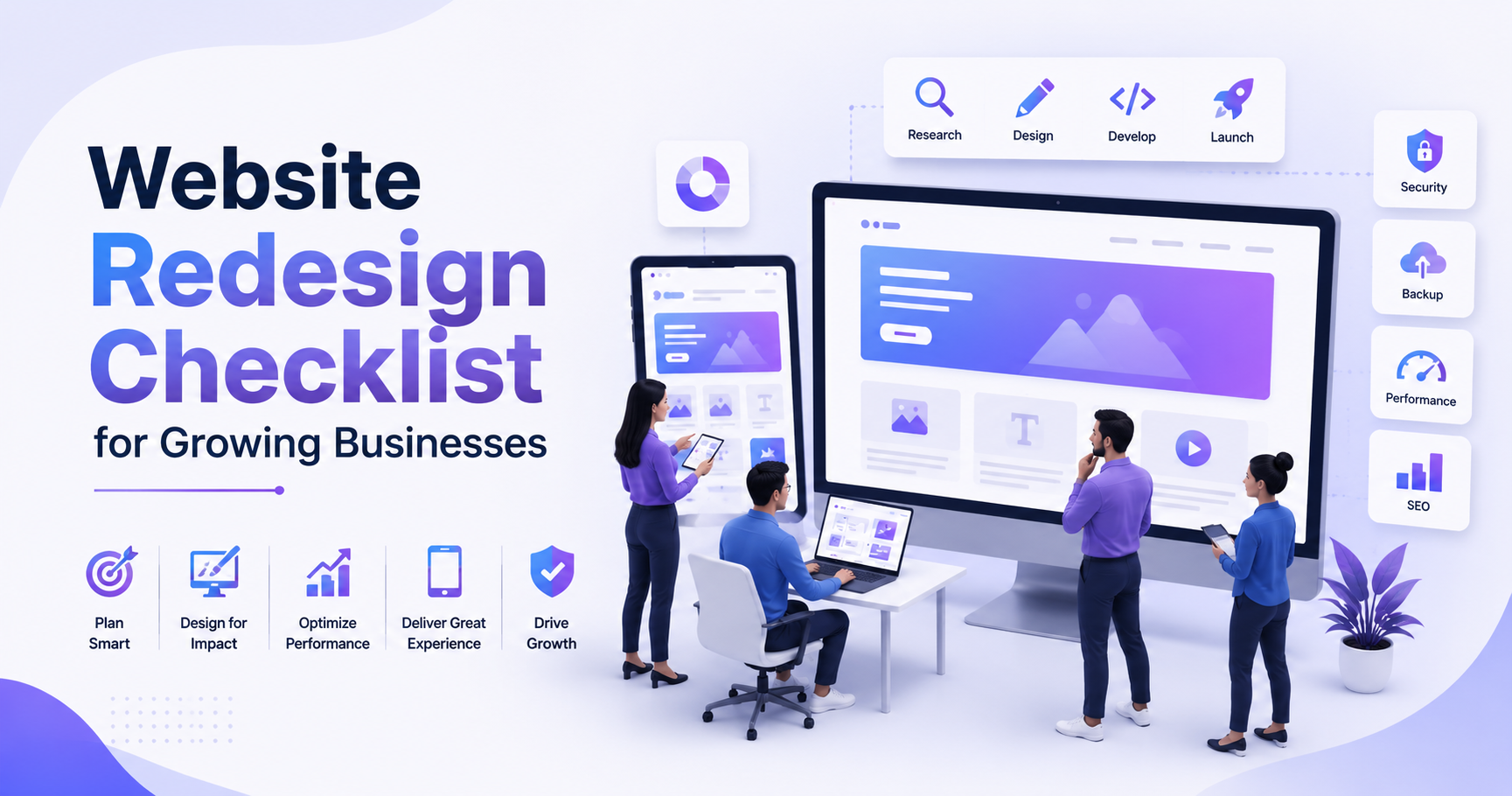
An outdated website can limit your business growth, reduce engagement, and affect search rankings. Explore this comprehensive redesign checklist to create a faster, more user-friendly, and conversion-focused website that meets modern customer expectations.
Introduction
A website redesign can be the catalyst for growth that a business needs. Whether you're looking to improve user experience, boost conversions, or simply modernize your online presence, a well-structured approach is essential.
As businesses evolve, so do their websites. An outdated site can hinder your brand’s potential, leading to higher bounce rates and lost customers. According to a 2024 survey by Statista, 70% of users cite website design as a significant factor in their purchasing decisions. This highlights the importance of a thorough redesign process.
To ensure your redesign is effective, consider these key points:
- Identify goals: Are you looking to increase sales, enhance brand awareness, or improve user engagement?
- Analyze current performance: Use tools like Google Analytics to understand user behavior and identify areas needing improvement.
- Engage your audience: Gather feedback from existing customers to inform design choices and content needs.
Pro tip: Create a timeline for your redesign project with milestones to keep your team on track and accountable. With the right strategy, your website can evolve into a powerful tool for growth.
Understanding the Need for a Website Redesign
Recognizing when it's time for a website redesign is crucial for maintaining a competitive edge. Businesses evolve, and so do customer expectations. If your website is outdated, it can hurt your brand image and user experience.
Consider these indicators:
- High bounce rates: If users leave your site quickly, it may be due to poor design or slow loading times.
- Low conversion rates: A website that doesn’t effectively guide users can lead to missed opportunities.
- Inconsistent branding: If your website doesn’t align with your current brand identity, it can confuse potential customers.
- Mobile responsiveness issues: With more users accessing websites via mobile devices, an unresponsive design can alienate a significant portion of your audience.
Pro tip: Conduct a user survey to gather feedback on your existing site. This insight can guide your redesign efforts and ensure your new site meets customer needs. For example, a local bakery that revamped its website based on customer input saw a 30% increase in online orders within the first month.
Evaluating Current Website Performance
To effectively evaluate your current website performance, focus on critical metrics that reveal user behavior and content effectiveness. Start by analyzing:
- Traffic Sources: Identify where your visitors are coming from. Are they arriving via search engines, social media, or direct visits? Tools like Google Analytics can provide valuable insights.
- Bounce Rate: A high bounce rate may indicate that your landing pages are not engaging enough. Aim for a bounce rate below 50% for optimal user retention.
- Page Load Time: Slow-loading pages can frustrate users. Aim for a load time under 3 seconds. Tools like GTmetrix can help you assess and improve your speed.
- Conversion Rates: Measure how many visitors complete desired actions, such as signing up for a newsletter or making a purchase. A low conversion rate might signal the need for clearer calls to action.
Pro Tip: Conduct A/B testing on key pages to discover which elements resonate better with your audience. For example, a local coffee shop saw a 20% increase in sign-ups after testing two different newsletter subscription buttons.
Utilize these metrics as a foundation for your redesign strategy to ensure meaningful enhancements.
Setting Clear Objectives for the Redesign
Setting clear objectives for your website redesign is crucial to its success. Start by identifying what you want to achieve with the new design. Consider the following goals:
- Enhance User Experience: Aim for intuitive navigation and faster load times. For example, a leading e-commerce site increased its conversion rate by 20% after simplifying its checkout process.
- Boost SEO Performance: Ensure your redesign aligns with SEO best practices. Updating your site structure can improve rankings, as seen when a tech startup increased organic traffic by 150% post-redesign.
- Increase Lead Generation: Focus on optimizing landing pages to capture more leads. Launching targeted content and clear CTAs can significantly enhance lead flow.
- Reflect Brand Identity: Revamp your site to align with your current brand image. A cohesive aesthetic can strengthen brand recognition, as demonstrated by a restaurant chain that rebranded and saw a 30% increase in customer engagement.
Pro Tip: Use analytics to track your current performance. Define KPIs such as bounce rate, time on site, and lead conversion rates to measure success post-launch.
Key Elements of a Website Redesign Checklist
- Define Your Goals: Determine what you want to achieve with the redesign. Common goals include improving user experience, increasing conversion rates, or updating the brand image. For example, a local bakery increased online orders by 30% after streamlining their site layout.
- Analyze Current Performance: Use tools like Google Analytics to assess traffic, bounce rates, and conversion paths. Identifying pain points can guide your redesign strategy.
- User Feedback: Collect feedback from current users through surveys or interviews. Insights from real users can highlight what works and what doesn’t.
- Competitor Analysis: Examine competitors’ websites for inspiration and identify features that resonate with their audience. This can help you pinpoint potential improvements.
- SEO Considerations: Ensure that the new design maintains or enhances your current SEO performance. Use tools like SEMrush to identify keywords and optimize page structures accordingly.
- Content Strategy: Review and update your content. Ensure it's relevant, engaging, and aligned with your objectives. Pro tip: A/B test different content formats to see what resonates best with your audience.
- Responsive Design: Ensure your website is mobile-friendly. According to a 2024 survey by Statista, over 50% of web traffic comes from mobile devices, making this a critical factor in user experience.
- Testing and Launch: Before going live, conduct thorough testing. Check for broken links, load times, and usability across different devices. Launch with a solid plan for monitoring performance post-launch.
Assessing Business Website Redesign and Services
Assessing your business website redesign and services involves several key considerations that can significantly impact your growth. Start by evaluating your current website's performance. Use tools like Google Analytics to assess user behavior, bounce rates, and conversion rates.
Key areas to evaluate:
- User Experience (UX): Are visitors able to navigate easily? A/B testing can reveal what design elements resonate best with users.
- Brand Alignment: Does the current design reflect your brand’s values and voice? Consider a mini case study, like Slack’s redesign, which clearly communicates their brand identity through visuals.
- Mobile Responsiveness: As of 2023, over 50% of web traffic comes from mobile devices. Ensure your site is mobile-friendly to capture this audience.
Pro Tips:
- Gather feedback from users and stakeholders to identify pain points.
- Benchmark against competitors to see where you stand in terms of design and functionality.
- Prioritize features that drive conversions, such as clear calls-to-action and streamlined checkout processes.
Regular assessment ensures your redesign aligns with your business goals and customer expectations.
Incorporating Website UX Redesign and UI Improvement
When planning a website UX redesign, focus on user needs and behaviors. A seamless user experience can significantly boost engagement and conversion rates.
- Conduct User Research: Use surveys or interviews to understand your audience's pain points and preferences. For instance, a local bakery might find that customers prefer online ordering during lunch hours.
- Simplify Navigation: Ensure that users can easily find information. A clear and concise menu structure will keep visitors from getting frustrated and leaving your site.
- Optimize for Mobile: With over 50% of web traffic coming from mobile devices, ensure your redesign is mobile-friendly. Pro tip: Test your site on various screen sizes to identify any usability issues.
- Use Visual Hierarchy: Highlight important information through size, color, and placement. For instance, an e-commerce site can use larger images and bold text for special promotions.
- Incorporate Feedback Loops: After launching your redesign, gather user feedback continuously. Tools like heatmaps and user session recordings can provide insights into how users interact with your site.
Investing in UI improvements not only enhances aesthetics but also drives user satisfaction, ultimately contributing to business growth.
Ensuring a Smooth Website Migration
To ensure a smooth website migration, start by creating a detailed plan. This involves mapping out your current site structure and defining the new architecture.
- Set Up a 301 Redirects Plan: This is crucial for preserving SEO value. Identify high-traffic pages and create a list of redirects from old URLs to new ones. For example, if you’re changing from
oldsite.com/page1tonewsite.com/page1, a 301 redirect will help search engines and users find the new location seamlessly. - Conduct a Pre-Migration SEO Audit: Tools like SEMrush or Ahrefs can help you analyze your current site's performance. Look for top-performing keywords and backlinks to ensure they are properly redirected after the migration.
- Test Before Launch: Use staging environments to test the new site comprehensively. Ensure that all links work, images load properly, and the site is responsive on different devices.
Pro Tip: Monitor your site’s performance using Google Analytics and Google Search Console after the migration. This will help you quickly identify any issues that might arise, like drop-offs in traffic or broken links. Consider a post-launch checkup 30 days after migration to reassess performance metrics.
Developing a Comprehensive Website Migration Checklist
- Establish a clear timeline for the migration process to minimize downtime. For instance, plan the migration during off-peak hours to avoid disrupting user experience.
- Back up your existing website. Before making any changes, use tools like UpdraftPlus or BackupBuddy to ensure all data is safely stored.
- Conduct a thorough SEO audit of your current site. This includes checking for broken links, analyzing page speed, and identifying high-performing content that should be prioritized in the new design.
- Create a URL mapping document. List all existing URLs and their new counterparts. This helps preserve SEO rankings. Example: If you’re consolidating pages, keep track of old URLs and implement 301 redirects accordingly.
- Test your new site thoroughly. Verify that all links work, forms function properly, and the site is responsive across devices.
- Set up Google Search Console and Analytics on the new site to track performance metrics from day one.
- Pro Tip: After the migration, monitor your website's performance for at least 30 days. Look for any drops in traffic or search rankings, and be ready to troubleshoot any issues that arise.
Optimizing for Website Conversion
To maximize conversions, ensure your website design encourages user action. Focus on these key areas:
- Call-to-Action (CTA): Place prominent CTAs throughout your site. Use action-oriented language like “Get Your Free Trial” or “Join Our Newsletter” to inspire clicks. For example, a redesign for an online coaching service increased sign-ups by 30% just by optimizing button placement and color.
- User Experience (UX): Streamline navigation to minimize bounce rates. A clear menu structure helps users find what they need quickly. Consider adding breadcrumbs to assist in easy navigation.
- A/B Testing: Regularly test different layouts, color schemes, and content. For instance, changing the color of a CTA button resulted in a 15% increase in conversion for a retail site.
- Mobile Optimization: Ensure your site is responsive. A mobile-friendly design caters to the growing number of users browsing on mobile devices. According to a 2024 survey by Statista, over 50% of web traffic comes from mobile.
Pro tip: Use heatmaps to understand where users click the most. This data can guide your design choices and help optimize for higher conversion rates.
Integrating Modern Website Design Trends
Integrating modern website design trends can significantly enhance user engagement and conversion rates. Staying updated with the latest styles is crucial for businesses aiming to attract and retain customers.
- Visual hierarchy: Ensure that the most important elements stand out. Utilize contrasting colors, larger fonts, and strategic placement to guide users naturally through your site.
- Minimalism: Adopt a clean design with ample white space to reduce distractions. For instance, Airbnb's homepage effectively uses minimal elements to focus user attention on the search bar.
- Mobile-first design: With over 50% of web traffic coming from mobile devices (Statista, 2024), prioritize mobile responsiveness. Make sure your site is easy to navigate on smaller screens, with touch-friendly buttons.
- Dynamic content: Incorporate interactive elements such as sliders or video backgrounds to keep users engaged. For example, Apple’s product pages often utilize motion to draw attention.
Pro tip: Use A/B testing to measure user response to different design elements. This data can help you make informed decisions on which trends to incorporate into your redesign.
Conclusion
In summary, a successful website redesign can significantly impact your business growth. Key takeaways from this checklist include:
- Define Your Goals: Clearly outline what you want to achieve, whether it’s increasing conversions, improving user experience, or enhancing brand consistency.
- Understand Your Audience: Conduct thorough research to know what your visitors need and expect from your website. Consider using tools like Google Analytics to gather user data.
- Prioritize SEO: Ensure that your redesign incorporates SEO best practices from the start, including mobile optimization and fast loading times.
Pro Tip: Regularly review and update your website even post-redesign. This keeps your content fresh and relevant, which can lead to higher search rankings.
For example, when XYZ Corp revamped their website, they saw a 30% increase in conversion rates within three months, simply by focusing on user experience and streamlined navigation.
Remember, a well-executed redesign is an ongoing process that requires attention and adaptation. Don't hesitate to revisit this checklist as your business evolves!
About the author

Santosh Shet
Santosh Shet is the Founder of Appyminds and a technology entrepreneur with over 20 years of experience in software development, web applications, mobile apps, AI solutions, and business automation. He helps businesses transform ideas into scalable digital products through modern web development, mobile applications, intelligent automation, and AI-powered solutions. Santosh regularly writes about artificial intelligence, software development, digital transformation, SaaS products, and emerging technology trends.