Landing Page Optimization Tips That Increases Website Performance
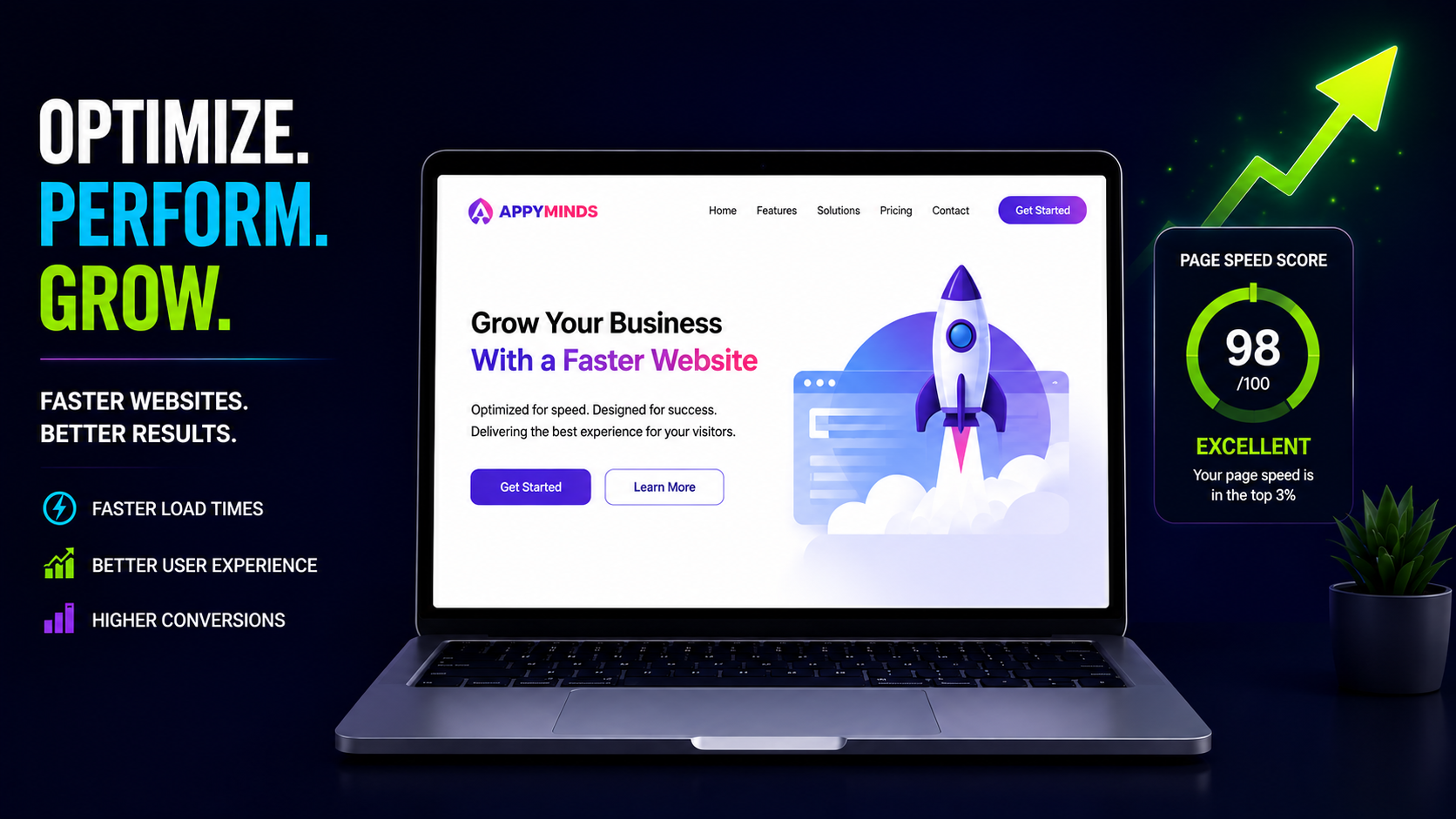
Learn practical landing page optimization strategies to improve conversions, user experience, and website performance. This guide covers essential design principles, compelling CTAs, faster page speeds, mobile responsiveness, A/B testing, and trust-building techniques to help turn more visitors into customers.
Introduction
In a digital landscape where first impressions matter, optimizing your landing page can make or break your online success. A well-crafted landing page not only captivates visitors but also drives conversions, ensuring that your marketing efforts yield tangible results.
Consider these eye-opening statistics: 68% of online experiences begin with a search engine, and nearly 88% of consumers are less likely to return to a site after a bad experience (Source: Google, 2023). With such high stakes, optimizing your landing page isn't just an option; it's a necessity.
To elevate your website's performance, focus on key elements such as:
- Compelling headlines that grab attention.
- Clear calls-to-action that lead users where you want them.
- Responsive design for seamless mobile experiences.
In this article, we will explore practical tips and strategies to enhance your landing pages, ensuring they not only attract but also retain visitors. Get ready to transform your landing pages into powerful conversion tools!
Understanding Landing Page Optimization
Landing page optimization is crucial for enhancing the effectiveness of your website. It involves refining various elements to increase conversion rates and improve user experience.
Key factors to consider include:
- Load Speed: Pages should load in under three seconds to reduce bounce rates. A study by Google indicates that a one-second delay can lead to a 20% decrease in conversions.
- Clear Call-to-Action (CTA): Ensure your CTA stands out and is easy to find. For instance, using contrasting colors and compelling language like “Get Your Free Quote” can significantly boost click-through rates.
- Relevancy of Content: Align your landing page content with user intent. For example, if your ad promises tips for digital marketing, don’t lead users to a generic homepage; instead, provide a focused guide.
- Visual Hierarchy: Use headings, bullet points, and images strategically to guide users’ eyes. A clean layout with clear navigation keeps visitors engaged.
Pro Tip: Regularly A/B test different elements on your landing page to find out what resonates best with your audience. This data-driven approach can lead to continuous improvements in performance.
Key Elements of a High-Converting Landing Page
High-converting landing pages share several key elements that effectively guide visitors toward taking action.
- Compelling Headline: Your headline should grab attention and clearly convey the value proposition. For example, “Unlock Your Potential: Join Our 30-Day Free Fitness Challenge!” is more engaging than a simple “Sign Up.”
- Clear Call-to-Action (CTA): Use concise and action-oriented language. Buttons like “Get Started Now” or “Claim Your Free Trial” are more effective than generic options like “Submit.”
- Minimalistic Design: A clean layout reduces distractions. Use ample white space and limit the number of options a visitor can choose from.
- Trust Signals: Incorporate testimonials, reviews, and security badges. For instance, a landing page featuring customer testimonials can increase conversions by up to 34% according to recent studies.
- Responsive Design: Ensure your landing page is mobile-friendly. With over 50% of web traffic coming from mobile devices, optimizing for mobile can significantly enhance user experience.
Pro Tip: A/B testing different elements, like headlines and CTAs, can provide insights into what resonates best with your audience.
Crafting Compelling Headlines
Crafting effective headlines is crucial for capturing attention and driving conversions. A well-crafted headline can make the difference between a visitor leaving your site or engaging with your content.
- Be Clear and Concise: Aim for headlines that communicate the value of your landing page instantly. For example, instead of "Increase Your Sales," try "Boost Your Sales by 20% in 30 Days."
- Incorporate Powerful Words: Use words that evoke emotion or curiosity. Terms like “proven,” “ultimate,” and “secret” can grab attention.
- Utilize Numbers: Headlines with numbers often perform better. For instance, “5 Tips to Optimize Your Landing Page” is more enticing than “Tips to Optimize Your Landing Page.”
- A/B Testing: Experiment with different headlines to see what resonates best with your audience. A small business saw a 35% increase in clicks after testing various headline formats.
Pro Tip: Keep SEO in mind by including relevant keywords without sacrificing clarity. For example, “Increase Website Performance with Effective Landing Page Strategies” can target search queries effectively while remaining compelling.
Using Persuasive Calls-to-Action
Using persuasive calls-to-action (CTAs) is essential for guiding visitors toward desired actions on your landing page. A well-crafted CTA can significantly boost conversion rates.
- Be Clear and Direct: Use action-oriented language. Instead of “Submit,” try “Get Your Free Guide Now!” This creates a sense of urgency and clarity.
- Use Contrasting Colors: Ensure your CTA buttons stand out. A bright button on a muted background draws attention. For instance, if your page is mostly blue, a bright orange button can be eye-catching.
- Position Strategically: Place CTAs above the fold for immediate visibility, and repeat them at the bottom for users who scroll. A/B testing different placements can reveal what works best for your audience.
Pro Tip: Adding phrases like “Risk-Free” or “Limited Time Offer” can create a sense of urgency, compelling users to take action. A case study from Crazy Egg showed that a simple change from “Try it Free” to “Start Your 30-Day Free Trial” increased conversions by 24%.
Make sure to track the performance of your CTAs regularly, adjusting based on user feedback and analytics.
Best Practices for Landing Page Design and SEO
- Keep it Simple: A cluttered landing page can overwhelm visitors. Focus on a clean design with a single call-to-action (CTA). For instance, a travel agency saw a 60% increase in conversions after streamlining its booking form to just three fields.
- Optimize for Mobile: With over 50% of web traffic coming from mobile devices, ensure your landing page is responsive. Test your page on various devices to guarantee readability and functionality.
- Fast Loading Times: Aim for a loading time of under three seconds. Tools like Google PageSpeed Insights can help identify areas for improvement. A retail brand that improved its page speed by one second experienced a 27% increase in conversions.
- Use Engaging Visuals: Incorporate high-quality images and videos that resonate with your audience. An e-commerce site that added product videos reported a 144% increase in purchase likelihood.
- SEO Optimization: Include relevant keywords naturally in headings, alt text for images, and the CTA. According to a 2024 survey by Statista, optimized landing pages can rank significantly higher in search results.
- A/B Testing: Regularly test different versions of your landing page. This can help identify what resonates best with your audience, leading to continuous optimization. Pro tip: even small changes, like button color or wording, can yield significant results.
Optimizing Page Load Speed
Optimizing page load speed is crucial for enhancing user experience and boosting SEO rankings. A slow-loading page can lead to higher bounce rates, negatively impacting your conversion rates.
- Minimize HTTP Requests: Combine CSS and JavaScript files whenever possible. Fewer requests mean faster loading times. For instance, a website that combined its CSS files reported a load speed improvement of up to 30%.
- Optimize Images: Compress images without sacrificing quality. Tools like TinyPNG or ImageOptim can reduce file sizes significantly. For example, a retail site that optimized its images saw a 25% increase in page speed.
- Leverage Browser Caching: Use caching to store frequently accessed resources. This allows returning visitors to load pages faster without re-downloading files.
- Use a Content Delivery Network (CDN): A CDN can distribute your content across various servers globally, reducing load times for users far from your main server.
Pro Tip: Regularly test your page speed using tools like Google PageSpeed Insights or GTmetrix. These tools provide actionable feedback to help you continuously improve your site’s performance.
Mobile Responsiveness
Ensuring your landing page is mobile responsive is crucial for optimizing user experience and boosting conversions. With over 54% of global website traffic coming from mobile devices, neglecting mobile responsiveness can lead to significant loss in potential customers.
- Use a responsive design that adapts content based on screen size. This means images, text, and buttons should scale appropriately without losing functionality.
- Test your landing page across various devices and browsers to identify any issues. Tools like Google’s Mobile-Friendly Test can highlight areas for improvement.
Pro Tip: Consider employing a mobile-first approach when designing your landing page. This means prioritizing the mobile experience and then scaling up for larger screens.
A case study by HubSpot found that companies implementing mobile-friendly designs saw a 20-30% increase in mobile conversions. Small changes, such as simplifying navigation and increasing button sizes, can make a notable difference in user engagement.
Ultimately, a seamless mobile experience not only retains visitors but also enhances your SEO ranking, making it essential for overall website performance.
Improving Website Conversion with A/B Testing
A/B testing is a powerful method for improving website conversions. By comparing two versions of a landing page, businesses can identify which elements resonate better with users. Consider these steps to effectively implement A/B testing:
- Choose One Variable: Focus on altering a single element such as the headline, call-to-action (CTA), or image. This ensures that you can accurately measure the impact of your changes.
- Set Clear Goals: Define what you want to achieve—higher click-through rates, reduced bounce rates, or increased form submissions.
- Use Reliable Tools: Tools like Google Optimize or Optimizely can help you set up and analyze your tests easily.
For example, a small e-commerce site tested two different headlines for its product page. The original headline, “Best Shoes,” resulted in a 3% conversion rate, while the variant, “Top-Rated Shoes Loved by Customers,” improved conversions to 5%.
Pro Tip: Always ensure you have enough traffic to get statistically significant results. Testing during peak times can accelerate this process.
Analyzing User Behavior and Feedback
Analyzing user behavior and feedback is crucial for refining your landing pages. By understanding how visitors interact with your content, you can make informed adjustments that enhance performance.
- Utilize Analytics Tools: Leverage tools like Google Analytics to track user behavior metrics such as bounce rates, average session durations, and conversion rates. These insights help identify which elements of your landing page are effective and which are not.
- Heatmaps and Session Recording: Tools like Hotjar can show you where users click and how they scroll. For instance, if a significant portion of your visitors ignores a call-to-action button, it might need repositioning or redesigning.
- Conduct Surveys and Feedback Forms: Direct feedback from users can provide invaluable insights. Ask simple questions like, "What prevented you from completing your purchase?" to gather actionable data.
Pro Tip: A/B testing different versions of your landing page can reveal what resonates best with your audience. For example, changing the color of a button or the headline wording can significantly impact conversion rates.
Regularly analyzing this data ensures your landing pages evolve alongside user preferences, ultimately boosting your website's performance.
Leveraging Social Proof and Trust Signals
Incorporating social proof and trust signals into your landing page can significantly boost conversions. These elements reassure visitors that they are making the right choice by choosing your product or service.
- Testimonials: Use compelling quotes from satisfied customers. For example, a skincare brand could feature a before-and-after photo along with a customer testimonial about their results.
- User Reviews: Display ratings and reviews from platforms like Trustpilot or Google. According to a 2024 survey by Statista, 79% of consumers trust online reviews as much as personal recommendations.
- Social Media Mentions: Highlight any mentions or accolades from reputable sites or influencers in your niche. This lends credibility and can create a buzz around your product.
- Trust Badges: Incorporate security icons (like SSL certificates) and certifications (like Better Business Bureau) to reassure visitors about data safety and service quality.
Pro Tip: Regularly update testimonials and social proof to keep content fresh and relevant. A/B test different formats and placements of these elements to find what resonates best with your audience.
Conclusion
Optimizing your landing page is crucial for enhancing your website's performance and achieving your business goals. Here are the key takeaways from the tips discussed:
- Clear CTAs: Ensure your call-to-action buttons stand out and use action-oriented language. For example, “Get Your Free Trial” is more compelling than simply “Submit.”
- Fast Load Times: A study by Google found that 53% of mobile users abandon sites that take longer than three seconds to load. Utilize tools like Google PageSpeed Insights to monitor and improve your page speed.
- Mobile Optimization: With over 50% of web traffic coming from mobile devices, a responsive design is non-negotiable. Test your landing page on various devices to ensure optimal viewing.
- A/B Testing: Regularly test different elements of your landing page, such as headlines and images, to see what resonates best with your audience.
Implementing these strategies can significantly boost your conversion rates. Start with one or two changes today and monitor your results. Continuous improvement is key—don’t hesitate to iterate based on data-driven insights.
About the author

Santosh Shet
Santosh Shet is the Founder of Appyminds and a technology entrepreneur with over 20 years of experience in software development, web applications, mobile apps, AI solutions, and business automation. He helps businesses transform ideas into scalable digital products through modern web development, mobile applications, intelligent automation, and AI-powered solutions. Santosh regularly writes about artificial intelligence, software development, digital transformation, SaaS products, and emerging technology trends.